

U.S. Manufacturing: All The Way Back
April 29, 2019
Business Facilities (Online)
The U.S. manufacturing sector finally has regained the output levels lost during the Great Recession. But an exceptionally tight labor market might put a damper on the celebration.
By the BF Staff
From the March/April 2019 Issue
Deloitte projections based on the Oxford Economic Model (OEM) indicate the official 2018 manufacturing GDP numbers will represent a three percent jump over 2017, the highest annual growth levels recorded since 2010, according to Deloitte’s most recent Manufacturers’ Outlook Survey.
Last year also produced healthy net employment gain, with the industry adding 300,000 new jobs. The U.S. Manufacturing PMI in September 2018 stood at 55.6, lifted by increasing industry output and new order gains, the survey stated.
However, the Deloitte survey indicates uncertainty over whether this trend will continue over the long term. Deloitte’s economic analysis indicates that manufacturing GDP should increase by 3.7 percent in 2019; if industry confidence is a reliable benchmark, this goal is achievable. According to the latest Manufacturers’ Outlook Survey, optimism in 2018 was measured at 93.9 percent, the highest yearly average in the history of the survey.
Meanwhile, an analysis by the Manufacturers Alliance for Productivity and Innovation (MAPI) indicates that the U.S. manufacturing sector is likely to regain output levels lost during the Great Recession before the middle of 2019.
However, the Deloitte survey points to some potential roadblocks that may loom as impediments to continued high-powered growth, including the fact that the manufacturing sector is in the midst of one of the tightest labor markets in history (a squeeze made tighter by more than 400,000 job openings since January 2018) coupled with unemployment rates so low they are the equivalent of a full-employment economy. Also looming over the big picture is the threat of a trade war and rising raw material costs. Let’s call it an up arrow with an asterisk, and hope for the best.
KENTUCKY: BUILDING BLOCKS OF PROGRESS
Kentucky has become known for advanced manufacturing techniques in the automotive and aerospace industries, and those products are shipped throughout the world.
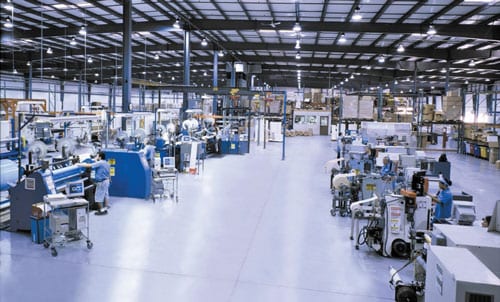
Berry Global (pictured) has purchased specialty tape maker, Adchem. Berry Plastics is planning a $16.5-million expansion of its Bowling Green operation. (Photo: Shutterstock)
Likewise, the commonwealth’s massive aluminum reserves have allowed Kentucky to lead the way in lightweighting technology in a variety of industries. Similarly, the Bluegrass State’s steel and iron industry continues to grow as its producers compete by introducing lighter, stronger formulations, new technology and capacity expansions.
On the other hand, you may not spend a lot of time thinking about chemicals, plastics and pharmaceuticals, but as industries go, they also are among the major building blocks of advanced manufacturing in Kentucky. And the world is taking notice of those products.
These sectors are often taken for granted, but most of us wouldn’t get very far in our daily lives without the products that come from them.
That’s why the entire Kentucky supply chain of manufacturing and distribution in these three industries is so critical. Not only do companies operating in these sectors employ tens of thousands of Kentucky workers; they are also responsible for tens of millions of dollars in capital investment.
Expanding firms typically say they choose Kentucky for its proximity to large population centers in the Eastern US, low energy costs, pro-business climate, superior transportation and logistics network, and an experienced, well-trained and reliable workforce.
The plastics and rubber sector alone accounted for 81 expansion and new-location projects in the commonwealth in just over three years between December 2015 and January 2019, totaling nearly $516 million in capital investment and promising 2,000-plus new full-time jobs in the coming years.
Among the largest projects was Danimer Scientific, which announced plans to locate a high-tech fermentation facility in Winchester, KY to manufacture biodegradable and compostable plastic products. The $36.2-million investment is set to create 37 full-time jobs.
Berry Plastics, meanwhile, announced plans to expand its Bowling Green operation by $16.5 million to boost the company’s unique printed film products. Berry operates eight facilities in Kentucky, including plants in Augusta, Danville, Franklin, Louisville, Madisonville, Nicholasville and two facilities in Bowling Green.
Automotive products supplier Pounds of Plastic Inc. announced in October it would locate a new advanced manufacturing operation in Owenton with an investment of more than $4.1 million, creating 54 full-time jobs. The firm will locate in the former industrial warehouse, a 30,000-square-foot building across from the former Itron manufacturing plant. Pounds of Plastic plans to make custom polymers and thermoplastics for automotive customers.
Plastics exports totaled $362 million in 2017 in Kentucky after topping $363 million in 2016. Overall, the industry employs nearly 29,000 people at 225 facilities. In the chemicals sector, 60 announced expansion and new-location projects in Kentucky between December 2015 and January 2019 account for $804 million in capital investment and the promised creation of 1,500 jobs over the coming years. In 2018, Vanderbilt Chemicals LLC announced it would invest $13.7 million to increase the output of its Calloway County facility, which produces additive compounds for numerous industries. Cabot Corp., meanwhile, started building a new $89-million plant in Carrollton to manufacture fumed silica.
The largest chemicals sector investment of 2018 came from Extiel-Advantage Somerset 1 LLC, which committed $75 million toward a natural-gas-to-liquid plant in Somerset in Pulaski County to produce synthetic waxes, oils, solvents and sustainable biopolymers.
In the health care and pharmaceuticals sector, CTI Clinical Trial and Consulting Services opened a new $36.4-million headquarters facility in Covington, KY, a project expected to create 500 new jobs, while PuraCap Labs expanded its packaging and distribution hub in Franklin with a $2.5-million upgrade.
Altogether, health care and pharmaceuticals manufacturing and service industry accounted for nearly 50 projects in Kentucky in just over three years ended January 2019, totaling $282 million in announced capital investment and 3,400 announced new jobs statewide. Pharmaceutical exports last year in Kentucky totaled nearly $2 billion, ranking third by product category, while chemicals exports totaled $655.7 million, ranking sixth.
OSWEGO COUNTY: CENTRAL MANUFACTURING HUB IN NY
Situated in Upstate New York, Oswego County is located centrally to New York City, Boston, Philadelphia, Cleveland, Toronto and Montreal. Yet, Oswego County has more to offer than an attractive location within hours of major Northeast markets.
Oswego County and Central NY has a robust manufacturing industry providing custom services for industrial, automotive, medical, aeronautics and military applications, as well as providing custom parts, fabrication and prototyping to other area businesses. This network of manufacturers creates a stable supply chain and major competitive advantage.
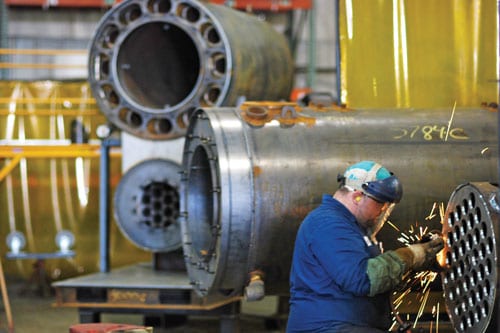
The Fulton Companies, headquartered in Pulaski, NY, produce complex heat transfer equipment for a wide range of commercial and industrial applications. (Photo: Oswego County)
Oswego County has a highly skilled manufacturing workforce, with welding, fabrication and CNC experience, who are ready to work. The workforce is supported by over 30 institutions of higher learning within 50 miles. These educational institutions work collaboratively with economic development organizations, workforce training centers and industry to develop training programs for advanced manufacturing. The intention of these programs is to create a pool of qualified candidates to fill available, as well as future, positions.
For those seeking entry-level manufacturing positions, Cayuga Community College (CCC) offers the Industrial Skills Workforce Training Program. Aligned with the National Alliance for Manufacturing (NAM) Skills Standards, with input from Oswego County manufacturers, this non-credit program introduces students to basic manufacturing concepts. Instruction includes everything from shop safety to set-up and operation of conventional machines and CNCs.
CCC also offers an Advanced Manufacturing Certificate in Mechanical Technology. Courses include Machine Tools, Computer Aided Design and Quality Assurance. The program can be completed in as little as one year.
With the assistance of area manufacturers, CCC is developing an Advanced Manufacturing Institute, including an industrial maintenance technician program. When implemented, the industrial maintenance technician program will incorporate hands-on training in laboratories that will be used by manufacturing employees as well as college students.
The Oswego County Pathways in Technology Early College High School (P-TECH) program, offered at the Center for Instruction, Innovation and Technology (CiTi), is a collaboration between Onondaga Community College, CiTi, industry partners Huhtamaki, Novelis, The Fulton Companies, Davis-Standard and Sunoco Ethanol, and all nine Oswego County school districts. P-TECH provides students, who are interested in Science, Technology, Engineering and Math (STEM), with an advanced manufacturing career path. Students can choose to pursue either mechanical technology or electrical engineering technology. The 9th-14th grade program allows students to earn a high school diploma and an Associates’ degree from Onondaga Community College at no cost to the student or their family. Upon successful graduation from the program, students are first in line for job openings with the industry partners.
In addition to a skilled workforce, Oswego County offers convenient access to Interstates 81 and 90 which provide north/south and east/west movement. Multiple carriers provide both local and long-distance trucking to and from Oswego County. Local logistics companies provide transloading from truck to rail and offer myriad warehouse storage options, including dry, climate controlled and frozen.
The Port of Oswego, a deep-water port on the southeastern shore of Lake Ontario, provides a major logistical advantage to industry in Oswego County and the Central New York region, as the first port of call and hub in the Great Lakes St. Lawrence Seaway System. The Port of Oswego provides on-dock rail and truck loading, making for a smooth transition of goods to market.
CSX offers daily rail transportation to Oswego County. Rail service is available throughout the County, with access to a nearby regional switching yard. Coupled with nationwide transloading and warehousing, CSX makes rail a very viable transportation option for Oswego County businesses.
Syracuse’s Hancock International Airport is within minutes of Oswego County. In addition to world-wide passenger transport, Hancock has facilities for air freight transport, which includes a 53,000-square-foot cargo building. The Oswego County Airport boasts two up-to 5,200 ft paved runways which are ideal for business, industry and private aviation.
Oswego County has many options for multimodal transport which are ideal for materials import and product export. As a designated Foreign Trade Zone (FTZ), Oswego County is designed for the convenient and cost effective production of goods.
With a strong economic base in manufacturing, Oswego County is equipped with modern industrial infrastructure including heavy power and gas. Coupled with plentiful water and wastewater options, this infrastructure provides flexibility for light- to heavy-industrial uses.
Many shovel ready sites are available in Oswego County. Within the industrial parks, all sites have utilities and other necessary infrastructure in place.
Oswego County’s geographic location, skilled workforce, collaborative support system, modern infrastructure, and multi-modal transportation options provide major competitive advantages for advanced manufacturing companies.
LOGISTICS MAKES WHEELING A LEADER
Nestled in Chicago’s prestigious northern suburbs, the Village of Wheeling, Illinois, is home to over 800 businesses, leading manufacturers, and a fast-growing residential market. A diverse and dynamic community of 40,000, Wheeling is located in immediate proximity to a skilled workforce and just nine miles from O’Hare International Airport.
Transportation and accessibility are among Wheeling’s strongest assets. Interstate Highways 94, 90 and 294 enable the convenient delivery of products, goods, and services, while also benefitting employees who seek to work closer to home. Wheeling is also served by a Metra commuter rail station located just steps from new, higher-end residential units. In addition to nearby airports and interstate highways, cargo can also be shipped via the Canadian National Railway.

A spec industrial development, undertaken by the Sitex Group and the Missner Group, is an 84,000-square-foot industrial building on the former site of the ABF Truck Terminal on Chaddick Drive in Wheeling, IL. (Photo: sitex group)
Wheeling is home to Chicago Executive Airport, which is co-owned by the Village and offers customs services for international travelers. Recent hangar expansions reflect the high demand for airport services as more and more executives and visitors are choosing to fly direct to Wheeling.
The Westin Chicago North Shore Hotel and Convention Center is also located in Wheeling, as is Restaurant Row, which offers over a dozen culinary choices and serves as a regional dining destination. The $110 million Wheeling Town Center—a transit-oriented mixed-use development adjacent to the Metra station and the world-class recreational amenities in Heritage Park—is currently under construction, and will serve as the Village’s first downtown. The development will feature 300 luxury residential units and 100,000 square feet of retail space; a retail portion opened for business in March of 2019, and the entire project is expected be completed this summer.
Those who choose to make Wheeling home will benefit from quality parks and schools. Wheeling’s wide array of community events, library and park district programs, recreational activities, and Village services and amenities are significant assets for its residents.
Nearly $300 million in new development projects are currently underway in Wheeling, spurred by both its strategic location and the Village Board’s commitment to promoting a business-friendly community. The vision and goals of the Board of Trustees have directly encouraged manufacturers to prosper in Wheeling. One such company is Germany-based copper manufacturer Wieland Metals, which is building a $25 million, 110,000-square-foot building adjacent to their existing facility.
Wheeling is home to several major manufacturers, including Reynolds, Handi-Foil, Richelieu Foods, Hidden Valley Ranch, SG 360° Communications, Keats Manufacturing, Champro Sports, and Creation Technologies. Wheeling has the fifth-largest manufacturing employment concentration in Illinois, after Chicago, Elk Grove Village, Rockford and Elgin.
“A number of Wheeling manufacturers produce components for NASA and the U.S. military, as well as automotive and security products,” Economic Development Director John C. Melaniphy III said. “The wide selection of products made in Wheeling also includes metal fabricators, electronics, medical devices, food processors, printing technology and more.”
Over 50 different sectors are represented in Wheeling’s diverse economic base, creating an innovative business community. Wheeling contains 14 million square feet of industrial space, with a low vacancy rate of 4.2 percent.
Regarding the Village’s commitment to commerce and industry, Melaniphy said, “Recently, the Village saw the construction of the first two speculative industrial development projects in Wheeling in over two decades. They provide the modern amenities that industries are looking for in this ever-changing global market.”
The first of the two is an 181,000-square-foot spec industrial building at 720 Northgate Parkway developed by Hamilton Partners in response to the tight demand for industrial space in Wheeling. The facility is designed for warehouse, distribution, logistics, and manufacturing uses. The project broke ground in April of 2017 and was completed in November of 2017. Because construction took place on a vacant industrial site and delivers the potential for job creation, the Village provided a Cook County Class 6b property tax incentive for the project.
The second spec industrial development, undertaken by the Sitex Group and the Missner Group, is an 84,000-square-foot spec industrial building at 1075 Chaddick Drive, the former ABF Truck Terminal site. The developer has targeted warehouse, distribution, logistics and manufacturing uses for the property. The project, which broke ground in the summer of 2017, was also granted a Cook County Class 6b property tax incentive given its redevelopment of a blighted industrial site and its job-creation potential. As of March 2019, the property was 60 percent leased by a leading national manufacturer.
Both new construction and the renovation of vacant industrial buildings may be eligible for Cook County Class 6b property tax incentives.
The Village also utilizes another economic development tool, tax increment financing (TIF), to encourage economic growth in specific areas, including certain industrial lots.
“Wheeling continues to grow and thrive. The Village is dedicated to bringing innovative companies to experience all that Wheeling has to offer—a strategic location, strong community support, and quality way of life,” said Business Development Coordinator Marianthi Thanopoulos.
If you are considering opening a new business, we encourage you to consider Wheeling. While Wheeling is an established suburb of Chicago, a considerable amount of property remains available for infill commercial and industrial development. For information on location or development opportunities, please visit www.wheelingil.gov/business or contact John Melaniphy, Director of Economic Development, at jmelaniphy@wheelingil.gov or at (847) 499-9094.
‘FUTURE FIT’ WORKFORCE IS READY FOR YOU IN ARKANSAS
A leader in manufacturing for more than half a century, Arkansas boasts nearly 3,000 companies that make things ranging from paper products to textiles, machinery to packaged food items, in industries that are fundamental to the state’s economic diversity and success.
And if you want to find yourself among good company, Arkansas can’t be beat. You’ll find a diverse economy in Arkansas, bolstered by a number of business sectors—distribution and logistics, corporate headquarters, manufacturing, aerospace and defense, metals, paper and timber products, and a burgeoning tech industry.
To help companies in Arkansas grow, evolve and become more competitive, the Arkansas Economic Development Commission (AEDC) offers a variety of programs and training focused on expanding markets and enhancing value within supply chains, among other potential opportunities.
In Arkansas, there is education and training available for particular industries—both new and existing—and our colleges are nimble enough to create a program to match your needs if necessary. From Career Readiness to the Arkansas Institute for Performance Excellence, AEDC and its partners provides training and consultation for businesses of all sizes and types.
After conducting more than 1,800 discovery visits to Arkansas manufacturers, AEDC found approximately 10,000 vacant jobs and a need for more capable and skilled workers in the pipeline. Of those unfilled jobs, 26.2 percent require no formal education and 52.5 percent require high school diploma or GED, plus some post-secondary training.
AEDC collaborated with 10 companies in Western Arkansas to identify job roles and needed skills sets to fill their entry-level employee roster. Next, AEDC partnered with Tooling U, the training arm of the Society of Manufacturing Engineers, to create “Future Fit,” a 120-hour training program that could remedy or at least give relief to companies struggling to find sufficient talent.
To best suit their training needs, each company provided a subject matter expert to create job profiles for 1.) Production Operator/Assembly, 2.) Mechanical Repair Technician and 3.) Mechatronics Technician roles. The job standards were utilized to create an initial screening assessment for program applicants, a curriculum from which to educate and train candidates for employment at these companies, and a final assessment as part of Future Fit training.
Future Fit is geared to high school graduates who don’t intend to enroll in a university, military veterans, unemployed or underemployed individuals, and non-violent offenders released by law enforcement. While those populations often have difficulty financing post-secondary training, that burden can be alleviated through the ArFuture Grant from the Arkansas Department of Higher Education. The grant provides funds for tuition and fees for eligible students enrolled in regional high-demand areas of study or STEM fields.
Currently being piloted in western Arkansas, AEDC plans to scale up the program to the entire state with industry-specific training for each region.
With low industrial electric costs, one of the nation’s lowest costs of doing business, and a central location in the midst of an intricate intermodal system of roads, rails, water and air, Arkansas has many advantages for manufacturers wanting to produce and distribute products quickly and efficiently at the lowest possible costs.
Whether you’re looking for a building or site that’s ready to occupy or a shovel-ready, you can find the right one here. We have a site for you that’s fit-for-purpose, with appropriate infrastructure and utilities to suit your needs. And our Competitive Communities Initiative—a designation only for those who have made a commitment to workforce and product readiness—ensures your business can be up and running quickly and efficiently in a community that is ready to welcome and support your business.
In Arkansas, we welcome not only well-established companies but also entrepreneurs and startups. Every large corporation began as a dream, and with vision became a small business that found its way. Our Business Development Division stands ready to help your dreams of business success become a reality in Arkansas. Reach out to us at info@arkansasedc.com.
CONSUMERS ENERGY: BUILDING CONFIDENCE IN SITE DECISIONS
As Michigan’s largest energy provider, Consumers Energy was designated a Business Facilities Editor’s Pick Top Utility and received an Honorable Mention Award in BF’s 2018 Economic Development Deal of the Year for the Spartan Michigan dairy facility.
Why would Consumers Energy be involved in economic development? The answer is simple: We’re committed to our communities in ways beyond energy to sustain Michigan’s economic future.
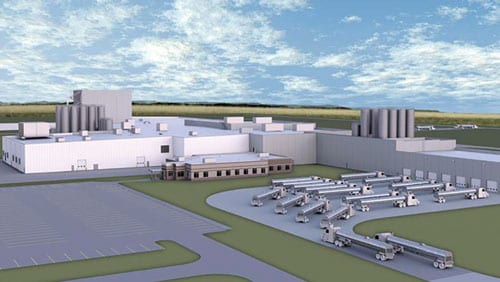
A 360,000-square-foot milk manufacturing facility and a separate 85,000-square-foot protein processing plant will make the Spartan facility one of the largest dairy complexes in the country. (Photo: Crain’s Detroit.com)
Businesses in Michigan enjoy several competitive advantages. Among them: a stable tax and regulatory environment, plentiful natural resources, proximity to major Midwest cities and Canada and robust research and development and engineering talent. Targeted incentives also are vital components of Michigan’s approach to business attraction and job creation.
In 2017, working with the U.S. Chamber of Commerce, Consumers Energy deployed a new way of addressing talent challenges—Talent Pipeline Management (TPM)—using supply chain management principles.
A first of its kind program in Michigan, TPM enables businesses to clearly identify and signal talent needs and engage with talent suppliers. These include local economic development agencies, K-12 schools and higher education institutions, workforce development organizations and others—also known as the talent supply chain.
Together with the U.S. Chamber of Commerce, Consumers Energy is training local economic development agencies, chambers of commerce and other workforce development partners to work with groups of employers using the TPM methodology. These employer-driven networks use TPM to help build their own talent supply chains and align business needs with educational offerings.
In Michigan’s Grand Rapids region alone, we’ve trained four facilitators working in local economic and workforce development agencies. They are working with more than 65 companies organized into manufacturing, IT, healthcare, energy, agriculture and other industry sectors.
How does this benefit a company entering the Grand Rapids region? No matter what talent door you enter, all agencies speak the same language and work together as one entity—the West Michigan TPM Network—to solve talent challenges. Collaboration between business and education lays the groundwork for Michigan’s next generation to work in good-paying jobs and stay in our state.
Michigan has 133,000 engineers statewide—the highest concentration of engineers in the nation. Michigan also ranks in the top 10 for its number of skilled trades workers (250,000) and offers a Going Pro talent initiative that can help your business find the skilled trades professionals you need anywhere in the state. In February 2018, Michigan upped the ante on career readiness when former Gov. Rick Snyder announced the Marshall Plan for Talent. The Marshall Plan is a $100 million workforce development initiative enabling education and business leaders to apply for grants to create and develop programs to prepare workers with professional trades skills.
Consumers Energy’s job is to build confidence in Michigan site selection decisions and the siting process. We’re working to reduce risk by offering competitive industrial rate options, natural gas prices 60 percent lower than a decade ago, and robust new construction and energy efficiency incentives.
From demand response to solar distributed generation, net metering and a large customer renewable energy program supporting large companies’ renewable energy commitments, we offer options to help make renewable energy goals a reality. Having set a goal to reduce carbon emissions 80 percent and eliminate use of coal to generate electricity by 2040, we’re positioning renewable energy as a cornerstone of Michigan’s energy future.
We’re proud of our deep relationships with the Michigan Economic Development Corporation and local economic development agencies. No matter how a business begins the siting process, we’re at the table as a team to understand a company’s long-term goals and provide tools beyond energy to reach them, with focus on growth. We connect all the dots: education and talent, tax incentives, electric rates and natural resources and more. We work together to understand how all factors fit together for each business, and we recognize what works for one business might not for another.
The result is a seamless, from-all-angles, “we’ve got this” customer experience. That’s a major reason why, in 2018, leaders in automotive, medical technology, retail and other industries are planning to invest more than $2 billion and create more than 5,700 jobs in Consumers Energy’s service territory.
Attracting businesses to Michigan and keeping them here means keeping upfront and ongoing energy costs competitive. Our goal is competitively priced—or potentially zero upfront cost—energy infrastructure for business customers.
When it comes to keeping energy costs low over the long haul, energy efficiency incentives for current and planned upgrades have saved our customers more than $2 billion since 2009 and offer competitive energy- and cost-saving advantages. We also assign a no-cost energy advisor to help businesses maximize energy efficiency incentives.
Consumers Energy shares in Michigan’s quest to become a top-tier state for business attraction. We know that goal is achievable, and we’re getting better every day.
Jackson, MI-based Consumers Energy is Michigan’s largest utility and the nation’s fourth largest combination utility. Consumers Energy provides natural gas and/or electric service to 6.7 million of Michigan’s 10 million residents in all 68 Lower Peninsula counties.
For more about Consumers Energy’s economic development services, contact Ray De Winkle, Director of Business Customer Strategy and Growth, at (616) 213-4836, email EconomicDevelopment@cmsenergy.com or visit ConsumersEnergy.com/econdev.




